Since the genesis of the CubeSat standard, the usage of CubeSats has become increasingly popular in commercial, military, and academic applications alike. CubeSats typically serve as cost effective test-beds and demonstrators for various in-space technologies in earth orbit. However, their low cost paradigm is beginning to extend into many other areas of satellite operations. With the advent of new technologies, the use of CubeSats for missions extending far beyond earth orbit can be realized. The first step towards the realization of interplanetary CubeSat (iCubeSat) missions is the identification and evaluation of candidate mission architectures. The idea of an iCubeSat is relatively new and it is, therefore, important to evaluate as many mission architectures as possible while avoiding the use of historical experience as a down-selection tool. This study uses various pre-conceptual level systems engineering techniques to identify and evaluate candidate architectures for a general iCubeSat mission. The architectures are assembled using a Morphological Matrix of Alternatives (MoA), and are then evaluated against a list of attributes using an Analytical Hierarchy Process (AHP). Application of AHP allows for the use of qualitative data in performing a quantitative assessment, enabling a rapid evaluation of all the possible mission architectures that can be defined by the MoA. From this analysis, the Pareto optimal solutions are identified, providing insight into the driving trades that exist for the novel concept of iCubeSat missions. A method for identifying candidates from the Pareto optimal solutions for further study is presented using Multi-Attribute Decision Making (MADM) techniques to rank the architectures based upon a prioritization of mission objectives.
iCubeSat 2012 A.1.2 Identification and Evaluation of iCubeSat Mission Architectures – Mathew Zwack
June 23, 2012iCubeSat 2012.A.1.1 Interplanetary CubeSats: Some Missions Feasible Sooner than Expected – Robert Staehle
June 23, 2012NASA’s Innovative Advanced Concepts (NIAC) program selected Interplanetary CubeSats for further investigation, some results of which are reported. Interplanetary CubeSats enable small, low-cost missions beyond LEO. This class is defined by mass <~ 10 kg, cost < $30M, and durations up to 5 years. Over the coming decade, a stretch of six distinct technology areas, creating one overarching architecture, can enable comparatively low-cost Solar System exploration missions with capabilities far beyond those demonstrated in small satellites to date.
Technologies:
1. CubeSat electronics and subsystems extended to operate in the interplanetary environment (esp. radiation and duration of operation).
2. Optical telecommunications to enable very compact, low power uplink/downlink over interplanetary distances.
3. Solar sail propulsion to enable major maneuvers and rendezvous with multiple targets using no propellant.
4. Navigation of the Interplanetary Superhighway to enable multiple destinations over reasonable mission durations with achievable delta-V.
5. Small, highly capable instrumentation (such as a miniature imaging spectrometer) enabling acquisition of high-quality scientific and exploration information.
6. Onboard storage and processing of raw instrument data and navigation information to enable maximum utility of uplink and downlink telecom capacity, and minimal operations staffing.
When integrated, these technologies form the Interplanetary CubeSat Architecture.
Architecture: Interplanetary CubeSats build on the existing Earth-orbiting CubeSat architecture. Target spacecraft volume is 10 cm x 20 cm x 30 cm (6U). 2U are reserved for the mission-specific payload. The solar sail occupies 2U and deploys to form a 6 x 6 m or larger square. The solar sail is based on the Planetary Society/Stellar Exploration LightSail™ 1, plus electrochromic tips for attitude control. A 2-way optical communication terminal occupying 1U is based on JPL laser telecommunications developments, with a link capacity of 1 kbps @ 2 AU Earth-spacecraft distance. The final 1U is used for satellite housekeeping (C&DH, power, attitude determination) and based on CalPoly CP7 and JPL CubeSat On-board processing Validation Experiment (COVE) avionics.
Candidate missions: Though there are many different missions that would be possible with this architecture, the potential missions being researched under NIAC sponsorship are:
1. Mineral Mapping of Asteroids
2. Solar System Escape Technology Demonstration
3. Earth-Sun Sub-L1 Space Weather Monitor
4. Phobos Sample Return
5. Earth-Moon L2 Radio Quiet Observatory
6. Out-of-ecliptic Missions
Objectives and technology drivers of these missions are reported to illustrate the broad spectrum of missions enabled by advancing the CubeSat state-of-the-art beyond low Earth orbit.
iCubeSat 2012 K.1.1 Space Technology At NASA: Breadth, Depth, and a Small-Satellite Strategy – Mason Peck
June 8, 2012NASA’s new Space Technology Program has funded more than 1,000 projects since its inception in 2011. These projects span the entire spectrum of technology readiness – from early-stage concepts to flight-demonstration hardware that will enable our future missions. Several new programs at NASA within Space Technology offer funding opportunities for innovators across the nation to develop small-satellite technologies: ELaNa, which provides launch opportunities for cubesats; Edison, which provides significant funding for in-orbit technology demonstrations; and a suite of early-stage innovation and game-changing development programs. In particular, the Edison SmallSat program helps to continue America’s leadership in space through the further development of this class of satellites–small, agile and relatively inexpensive spacecraft that could perform many tasks in science, exploration, operations, and commercial development of space in a way that has not been seen before. These spacecraft represent a new opportunity for NASA to approach its diverse goals in science, exploration and education. Encouraging the growth of small-spacecraft technology also benefits our economy. Many of the technologies that enable small spacecraft come from the innovative world of small business, where commercial practices provide innovative and cost-effective solutions. Those technologies will continue to advance in performance as demand and competition drive companies to excel.
iCubeSat 2012 presentations and video
June 3, 2012


At the end of a busy week, we have finally finished processing all the presentations and video captured from the live streaming. You can view all the talks, posters and supporting sessions by clicking on the items of interest listed in the updated program here. High quality video will follow next week as soon as we receive the master tapes.
iCubeSat 2012 – Day two
May 30, 2012It’s day two of iCubeSat 2012 and the live streaming is online and can be viewed here.
Welcome to iCubeSat 2012!
May 29, 2012The halls are buzzing with the attendees and exhibitors arriving at the first Interplanetary CubeSat Workshop. Our live streaming will be going live at about 13:55 Eastern time for a 14:00 start and you can watch and interact by visiting this page or clicking on the live streaming link on the right.
Almost time…
May 28, 2012

It’s a beautiful Memorial Day in sunny Boston and we’re putting the final touches to preparations for iCubeSat 2012. You can collect your badge and conference bag (including the book of abstracts) from 1PM onwards tomorrow (Tuesday) on the sixth floor of the MIT Media Lab (building E14, room E14-633 to be precise). We have lots of signs and maps here so you shouldn’t get too lost. If you haven’t done so already, please upload your presentation/poster and optional paper as described here today as tomorrow will be too late. As you can see from our visitor statistics map (above), this is an international interplanetary event! Details of the live streaming service for those who haven’t been able to make it will be posted here when the workshop starts at 2PM tomorrow – see you then!
Registration closes on Thursday 24th May 2012
May 22, 2012It’s less than a week to go until the workshop and as well as our auditorium being full, our overflow area is nearly full too. If you’d like to attend, please register before 1700EST on Thursday 24th May 2012 when we expect to have to close registrations. Please note that on site registration won’t be possible as we won’t have any room and it is not permitted due to local regulations. If you can’t get in, we will be live streaming the workshop, so one way or the other we look forward to seeing you in person or virtually in Boston next week for an exciting workshop!
Program and Instructions for Authors
May 13, 2012

The provisional program for iCubeSat 2012 is now online here. If you are an author, please review the Instructions for Authors and follow the instructions for uploading your presentation / poster and optional paper. Please note that we must receive all presentations, posters and optional papers no later than the 28th May 2012 and will be operating a ‘no upload, no podium’ rule.
We have rearranged our venue to provide an extra 50 seats in an area of the exhibition hall that will be video linked to the auditorium to give more people the chance to participate on site. Approximately half of these seats have already been reserved by people on the waiting list, so we recommend registering here as soon as possible to be placed on the waiting list and have the best chance of getting one of the remaining seats. We will be contacting those who have already reserved with details of how to confirm their place shortly.
Abstracts and registration waiting list
April 6, 2012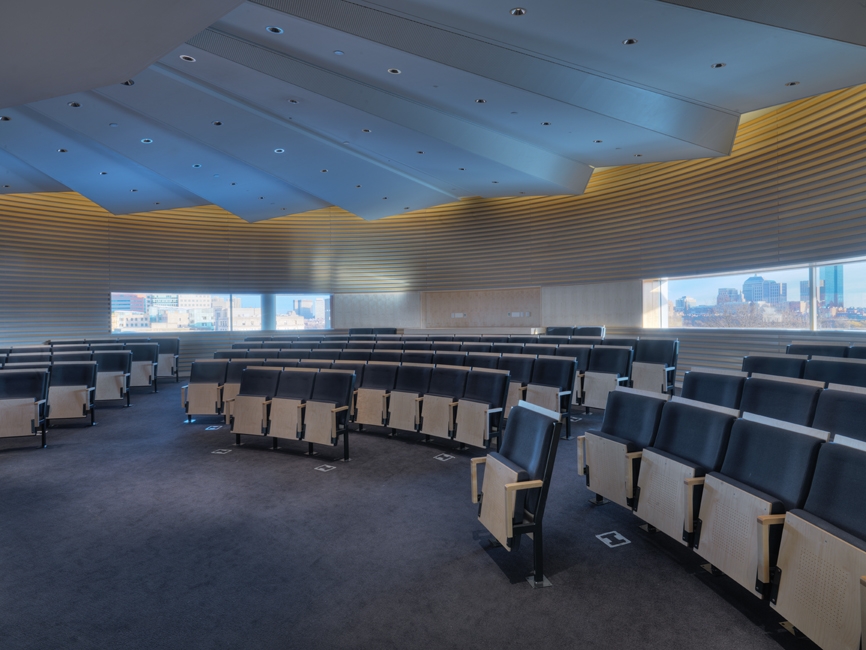


We’re pleased to announce that we received more than 40 high quality abstracts for the workshop and expect to send out notifications to authors by April 15th as scheduled. Registration as an attendee or exhibitor has now moved to a first come first served waiting list system as we are full. If you would like to attend in either capacity, please register on the waiting list as some places will probably open up due to cancellations and we are reconfiguring the venue to accommodate additional attendees and exhibitors. We also plan to live stream the event, so please sign up via the registration form if you would like to attend that way so we can be sure to accommodate you – thanks!














 iCubeSat